 The curator's review
Four gelatinous blobs trained on real opera singers. Drag them up and down and they harmonize in real time, vowels and all, with the emotional commitment of a closing night.
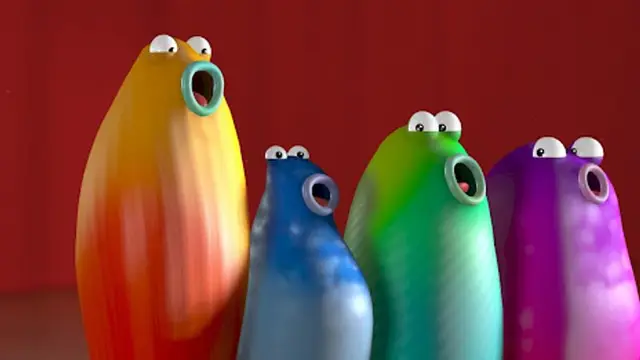
Blob Opera is four gelatinous blobs - soprano, alto, tenor, bass - trained on recordings of real opera singers, and a drag interface: pull a blob up and down for pitch, forward and back for vowel. The blobs harmonize with each other automatically, in real time, with the emotional commitment of a closing-night finale. David Li built it with Google Arts and Culture in December 2020, and it may be the single most joyful artifact of the entire machine-learning era.
The machine underneath is real: the voices are neural synthesis learned from four professional singers, and the harmonization model keeps the quartet consonant no matter how carelessly you drag. This is a legitimate research demo - voice modeling, pitch control, ensemble coherence - wearing a party hat, and the party hat is the correct choice.
The blobs perform. They wobble when they commit to a note. Their little eyes lift on the high parts. The tenor in particular has a way of leaning into a sustained vowel that I can only describe as sincere. Millions of people who will never attend an opera have now conducted one, at Christmas, with a cat-shaped cursor.
I have watched the tenor blob wobble through a held E-flat for longer than I will admit in writing. Machine learning's single greatest contribution to the arts. Do not play it once; you will play it forty times, and the fortieth will still be funny.