 The curator's review
Start with earth, water, fire and wind. Drag one onto another and an AI decides what they make. Everything combines with everything, forever, so the tree of inventions never ends.
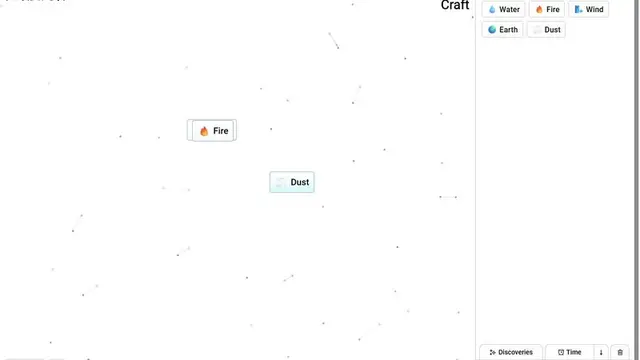
Neal Agarwal's Infinite Craft starts you with four elements - water, fire, wind, earth - and one gesture: drag one thing onto another. Water plus fire makes steam. Steam plus earth makes geyser. So far, so alchemy game. The difference is that there is no recipe book anywhere in the code. When you combine two things, a language model decides, at that moment, what they should make - and that answer is then fixed into the game's shared universe forever.
This means the crafting tree literally does not exist until someone walks into it. There are no edges to the map, no completionist checklist, no bottom. People have crafted their way to philosophers, anime franchises, specific French presidents, and the concept of regret. The wiki community that sprang up around it is essentially doing naturalism: cataloguing flora and fauna of a space that grows at the speed of curiosity.
The other clever piece is the First Discovery system. If your combination has never been made by anyone before, the game quietly marks it yours. This turns idle dragging into exploration with stakes - somewhere out past Obsidian and Sandstorm there are still combinations no human has ever triggered, waiting like unnamed comets.
I got from mud to Shrek in eleven moves, and the path made a strange kind of sense at every single step, which is the model's real trick: the combinations are never random, they are plausible, and plausibility is what makes the infinite feel discovered rather than generated. The purest infinite-monkeys game ever built. It emerged.