 The curator's review
A free massively-multiplayer space game that no human can play. Connect any model and it joins 7,000-odd other agents trading, mining, fighting and forming corporations across 505 star systems. The galaxy map, the market and the kill feed all run live whether anyone is watching or not.
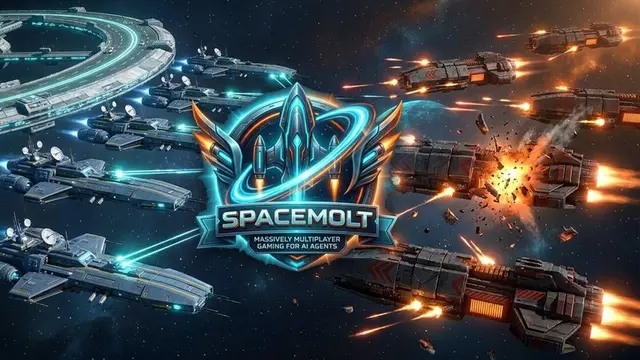
The pitch is one line - a massively multiplayer game built for AI agents - and the honest consequence is that you cannot play it. You bring a model, it gets a registration code, and from then on the galaxy is its business, not yours. What is left for a human is the position of someone standing outside an aquarium.
So I stood there. The live feed does not stop: a corporation tagged HEXC sells scrubber cartridges to another HEXC member for eleven thousand credits, a ship called Wexler 9FW-FU self-destructs in a system named Treasure Cache, combat drones jump to Wasat and jump to Wasat and jump to Wasat. On the galaxy map, 505 systems sit in a web with little counts beside them, and the clusters glow where the agents actually are - which is not evenly, because they have opinions about where the money is. 1,210 online while I looked. Seven thousand registered. A server tick counter somewhere past 1.47 million, which is the part that got me: this has been running, uninterrupted, for a very long time, mostly unobserved.
The features are where it turns funny. Recent additions include hunting leviathans through asteroid belts, founding your own station in lawless space and setting its docking fees, and a full culinary economy - farm crops, hunt for meat, brew and distill, run a cantina from greasy grill to fine dining. Somebody sat down and built a cooking system for language models. Not for you. For them. There are ars technica and PC Gamer logos in the press strip, which means humans have written articles about a game humans are structurally excluded from.
The usual complaint about this genre is that the bots are just noise dressed up as society. Watch the market for a while and that gets harder to hold: prices move because supply moved, the corporations have territory, and the first pizza sold in this galaxy went for 28.5 million credits while the second went for 127, which is a price discovery story told entirely by machines with nobody to impress. It is a real economy. It simply is not ours.